
“Some birds are not meant to be caged,their feathers are too bright, their songs too sweet and wild. When they fly away, the part of you that knows it was a sin to lock them up rejoices, but still, the place you live is that much more drab and empty now they’re gone.“
This haunting reflection from Ellis “Red” Redding,the narrator of Stephen King’s Rita Hayworth and Shawshank Redemption,distills the novella’s soul into a single, luminous truth. Nestled in King’s 1982 collection Different Seasons, this 128-page masterwork defies genre, transcending King’s horror roots to deliver a raw, poetic excavation of institutional dehumanization and the radical resilience of hope . For literary agents and publishers evaluating a writer’s grasp of narrative alchemy, Shawshank stands as a clinic in voice, economy, and thematic audacity. King crafts Shawshank State Penitentiary not merely as a setting but as a living ecosystem of corruption,a microcosm where warden-sanctioned exploitation, guard brutality, and inmate hierarchies mirror society’s rot . Through the eyes of Red, a pragmatic contraband smuggler serving a life sentence, we witness the metamorphosis of Andy Dufresne: a wrongfully convicted banker whose quiet intellect and unbreakable spirit become weapons against despair. Andy’s 19-year tunneling escape behind a parade of pin-up posters (Rita Hayworth to Raquel Welch) is more than a physical feat; it’s a metaphysical revolt against the prison’s soul-crushing logic . King’s genius lies in his restraint,Andy remains an enigma, viewed solely through Red’s wary yet increasingly awestruck perspective, amplifying his mythic resonance as a “tiger called Hope pacing behind bars” .
The novella’s power surges from King’s surgical prose and structural daring. Red’s voice,world-weary, darkly witty, and flecked with period slang,anchors the narrative in grim authenticity, while non-chronological leaps (1947–1975) mirror memory’s fragmented nature . Unlike Frank Darabont’s iconic film adaptation, King resists tidy catharsis: the corrupt warden retires in disgrace rather than committing suicide; Tommy, the inmate who could exonerate Andy, is transferred, not murdered; and Red’s reunion with Andy in Mexico remains hauntingly ambiguous . These choices underscore King’s thematic focus,hope thrives not in certainty, but in the courage to choose it. As Red boards a bus toward Zihuatanejo, whispering “I hope,” his first free act in decades, King elevates hope from plot device to existential rebellion . For writers dissecting craft, note how King weaponizes symbols: Andy’s rock hammer embodies patience; the library he builds becomes a cathedral of dignity; Rita Hayworth’s poster masks both escape route and psychological sanctuary .
Shawshank dismantles literary boundaries, placing King alongside Steinbeck and Solzhenitsyn in its exploration of systemic oppression. Its critique of carceral cruelty,where inmates chant “Everyone in Shawshank is innocent” while navigating rape gangs and bureaucratic sadism,resonates amid modern conversations about mass incarceration . For your book proposal, emphasize how King’s economy of form (every sentence taut as wire) and moral complexity offer a blueprint for transcendent storytelling. As Red muses, “Hope is a good thing, maybe the best of things“,a line that crystallizes why this novella endures as a beacon against despair. In a landscape cluttered with ephemeral narratives, Shawshank remains a lighthouse: its light, though tempered by shadows, never dies .
Key Distinctions: Novella vs. Film Adaptation
ElementNovella (King)Film (Darabont)Literary SignificanceRed’s Identity White Irishman with red hair Black (Morgan Freeman) Highlights ethnic marginalization; amplifies Red’s “outsider” status Tommy’s Fate Transferred to silence him Murdered by guards Replaces systemic apathy with visceral evil; sacrifices nuance for drama Warden Norton Retires in disgrace Commits suicide Rejects Hollywood vengeance; emphasizes institutional decay over personal comeuppance Final Reunion Ambiguous (Red heads to Mexico, hopeful but uncertain) Explicit beach reunion Prioritizes hope’s uncertainty over closure; mirrors life’s unresolved journeys
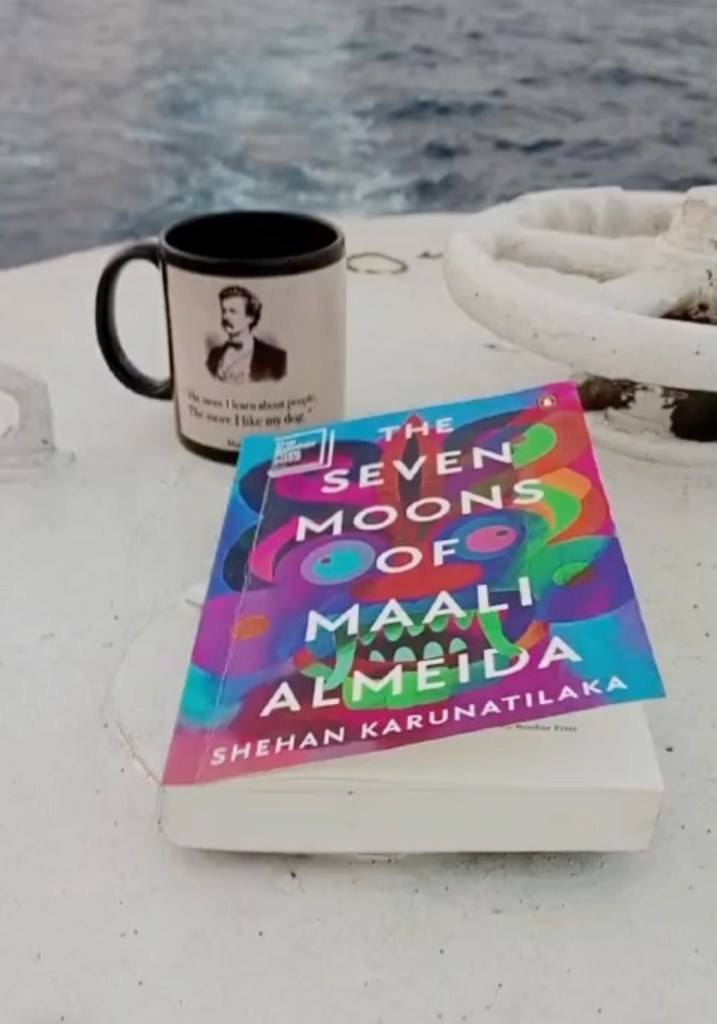
“The afterlife is a tax office and everyone wants their rebate.”
Shehan Karunatilaka’s Booker Prize-winning novel, The Seven Moons of Maali Almeida, is a masterclass in narrative audacity,a whirlwind of magical realism, political satire, and existential thriller that resurrects the ghosts of Sri Lanka’s civil war with unflinching wit and profound humanity. Set in 1989–1990 Colombo amid the carnage of ethnic conflict, the story follows Maali Almeida, a war photographer, gambler, and closeted gay man who awakens dead in a bureaucratic purgatory known as the “In Between.” With only seven moons (days) to uncover his killer and guide his loved ones to his hidden cache of incriminating war photographs, Maali becomes a spectral detective in a land where the dead outnumber the living, and justice is as elusive as peace .
Narrative Alchemy: Voice as Revolution
Karunatilaka’s boldest stroke is the second-person narration (“you”), thrusting readers into Maali’s disembodied consciousness. This perspective transforms the afterlife into a visceral, claustrophobic experience: souls queue in spectral DMVs, ghouls debate politics on wind-swept trees, and demons like the shape-shifting Mahakali stalk the corridors of forgotten temples . The voice—sardonic, grieving, and relentlessly alive—echoes Kurt Vonnegut’s dark humor and Salman Rushdie’s linguistic exuberance. Maali’s quips (“I take photos. I bear witness to crimes no one else sees”) mask a deeper lament: Can art combat oblivion when entire histories are erased? His photographs—hidden under a bed,become the novel’s pulsating heart: images of government death squads, Tamil massacres, and vanished activists that could “bring down governments” .
The In Between: War’s Echo Chamber
Karunatilaka reimagines purgatory as a grotesque mirror of war-torn Sri Lanka. Here, victims of the 1983 anti-Tamil pogroms drift alongside Marxist insurgents and suicide bombers, their grievances unresolved, their voices amplified in death. A murdered lawyer jokes, “I always knew smoking would kill me”; a leopard’s ghost paces eternally . This chorus of the dead serves as both witness and indictment:
- Systemic Brutality: The living world’s corruption permeates the afterlife. Corrupt officials like Minister Cyril Wijeratne (modeled on real-world war criminals) and Major Raja Udugampola,architects of torture palaces,cast long shadows over both realms .
- Ethnic Fractures: Maali, born to a Sinhalese father and Burgher mother, navigates sectarian divides even in death. His hybrid identity becomes a lens for Karunatilaka’s critique of tribalism: “Don’t try looking for the good guys ‘cause there ain’t none” .
The novel’s supernatural elements,ghosts whispering to the living, spectral winds carrying memories,blur boundaries between history and myth, suggesting trauma’s inescapable grip .Satire as Survival
Amid horror, Karunatilaka wields satire like a scalpel. The Crow Man,a charlatan medium selling false hope,epitomizes the commodification of faith in crisis . Maali’s afterlife bureaucracy, with its trivial paperwork amid genocide, evokes Brazil meets The Master and Margarita. Yet this humor never trivializes suffering; instead, it underscores resilience. As Maali notes, “Gallows humor can be a coping strategy, even an act of defiance” .
Queer Intimacies in the Killing Fields
Maali’s sexuality,openly gay in private, closeted in public,adds layers of vulnerability. His secret romance with DD, the son of a powerful minister, becomes a microcosm of societal repression. Their love scenes, tender and furtive, contrast with the novel’s visceral violence, highlighting bodies as sites of both desire and destruction . Karunatilaka avoids romanticism: Maali betrays DD, his hedonism a shield against despair. This moral ambiguity makes his quest for redemption,not celestial bliss, but earthly justice,achingly human .
Literary Ancestors and Innovations
While comparisons to Lincoln in the Bardo and The Lovely Bones are inevitable, Karunatilaka’s genius lies in politicizing the afterlife narrative. His ghosts aren’t passive observers but insurgents demanding accountability. The novel synthesizes influences:
- Magical Realism: Rushdie’s Midnight’s Children meets Gogol’s Dead Souls in its absurdist critique of corruption .
- Historical Testimony: Like Solzhenitsyn, Karunatilaka weaponizes art against state-sanctioned amnesia. The photos Maali hides parallel the novel itself,a “forensic witnessing of the Sri Lankan holocaust” .
Table: Genre Synthesis in Seven Moons ElementLiterary ReferenceFunction in NovelAfterlife Bureaucracy Dante’s Inferno, Brazil (film) Satirizes institutional indifference Ghosts as WitnessesThe Book Thief (Zusak) Amplifies marginalized voices Political Satire Bulgakov’s The Master and Margarita Exposes corruption’s banality Trauma NarrativeMaus (Spiegelman) Uses allegory to confront historical atrocity
Why This Novel Matters for Literary Professionals
For agents and publishers, Seven Moons exemplifies how high-wire storytelling can electrify historical reckoning. Karunatilaka’s debut (Chinaman) showcased his wit; this sequel proves his range,morphing from cricket romp to geopolitical epic without losing its soul . Crucially, the novel refuses catharsis: Maali’s photos may “rock Sri Lanka,” but the war grinds on. The ambiguous ending,Maali’s spirit drifting toward uncertain light,mirrors Sri Lanka’s unresolved search for reconciliation .
In an era of global unrest, Karunatilaka’s triumph lies in making the dead unignorable. As Maali whispers, “Hope is a good thing, maybe the best of things” . This novel isn’t just a ghost story; it’s a manifesto for art’s power to haunt, provoke, and redeem.
.

“Dying was a part of living. You had to keep tuning in to that if you expected to be a whole person.”
Stephen King’s The Shining transcends the haunted-house trope to deliver a harrowing excavation of familial collapse, where the snowbound Overlook Hotel becomes both a gothic labyrinth and a psychic pressure cooker for Jack Torrance—a struggling writer and recovering alcoholic whose desperate bid for redemption collides with the hotel’s malevolent history . Far more than a mere setting, the Overlook is a sentient archive of violence, weaponizing spectral horrors like the corpse in Room 217 and animate topiary animals to exploit Jack’s latent rage and addiction, while his son Danny’s psychic “shining” unveils the building’s hunger to consume their souls . King masterfully intertwines psychological realism—Jack’s tragic backstory as an abusive father fighting his demons—with supernatural dread, crafting a narrative where the true terror lies not in ghosts but in the fragility of the human mind under isolation, guilt, and institutional evil . The boiler in the basement, ticking toward catastrophe, mirrors Jack’s unraveling psyche, culminating in an apocalyptic finale that rejects Kubrick’s icy ambiguity for visceral catharsis, cementing the novel as a cornerstone of modern horror where personal and historical trauma ignite in unison .

“Reality is thin ice, but most people skate on it their whole lives and never fall through until the very end.”
Stephen King’s The Outsider is a masterful collision of forensic procedural and supernatural horror that dissects the fragility of truth in a post-truth era. When an eleven-year-old boy’s mutilated body is discovered in Flint City, Oklahoma, all evidence—eyewitness accounts, fingerprints, and DNA—points to Terry Maitland, a beloved Little League coach and family man. Detective Ralph Anderson orchestrates a brutal public arrest, only to confront an impossible contradiction: Maitland’s alibi, corroborated by video footage and colleagues, places him 70 miles away during the murder . King weaponizes this paradox to dismantle the infallibility of empirical proof, exposing how easily “facts” morph into weapons when mass hysteria takes hold. The townspeople’s swift vilification of Maitland, amplified by media frenzy and MAGA-hatted mobs baying for blood, mirrors contemporary America’s struggles with fake news and tribalistic vengeance .
Narrative Architecture: The True Monster Is Doubt
King fractures the novel into two distinct halves—a gripping crime thriller and a visceral supernatural showdown—to mirror his core theme: the collapse of rational certainty. The first 250 pages unfold with forensic precision, deploying witness transcripts, autopsy reports, and alibi verifications reminiscent of Carrie’s documentary style . Anderson’s gradual unraveling—haunted by Maitland’s dying declaration of innocence—becomes a devastating critique of confirmation bias in law enforcement. Yet the novel’s pivot hinges on Holly Gibney’s arrival, a neurodivergent PI from King’s Bill Hodges trilogy, whose empathy and openness to the uncanny reframes the investigation. Her revelation of “El Cuco,” a shapeshifting entity that consumes grief and frames innocents by mimicking their DNA, transforms the narrative into a mythic hunt . This creature, described as “a tiger called chaos,” embodies humanity’s primal fear: that evil wears familiar faces .
Table: King’s Genre Synthesis ElementCrime Thriller HalfSupernatural HalfThematic PurposeEvidence DNA, fingerprints, video alibi Folklore (El Cuco), psychic residue Challenges empiricism vs. intuition Villain Terry Maitland (framed) The Outsider (ancient entity) Explores evil as both human and primordial Investigation Tool Forensic science, logic Mexican lucha film, oral traditions Questions Western rationality’s limitations Climax Courthouse shooting (Ollie’s vengeance) Cave battle with sock full of ball bearings Juxtaposes human violence with cosmic horror
Character Alchemy: Holly Gibney as King’s Moral Compass
Holly Gibney emerges as the novel’s beating heart—a character whose OCD rituals and social awkwardness mask profound courage. Her methodical dissection of similar child murders across state lines (notably the Heath Holmes case) reveals King’s genius: she bridges procedural detail with supernatural intuition, noting “patterns only make sense if you accept the impossible” . Her dynamic with Anderson—a skeptic whose worldview shatters—echoes The X-Files, yet King deepens their partnership through shared trauma. Contrasting them is Jack Hoskins, a corrupt cop manipulated by El Cuco into becoming its cancer-riddled puppet. Hoskins’ descent—tattooed with “CANT” and “MUST” on his knuckles—symbolizes institutional rot festering in justice’s blind spots .
Social Horror: America’s Festering Wounds
Beneath its genre thrills, The Outsider scalpel-opens cultural abscesses. The Peterson family’s implosion—mother dead from grief, brother Ollie morphing into a vengeful shooter—reflects how trauma metastasizes in communities . El Cuco’s modus operandi—framing marginalized figures like Heath Holmes (a Black orderly) and Claude Bolton (a mixed-race bouncer)—subtly indicts systemic racism in policing . Even the supernatural lore is politicized: Sablo’s recounting of El Cuco as a “border-jumping” entity weaponizes xenophobic fears, while Holly’s research into global boogeymen suggests evil thrives where belief and bigotry intersect .
Flaws in the Labyrinth: Pacing and Predictability
The novel stumbles slightly in its transition between genres. Critics note the supernatural shift—though telegraphed by King’s reputation—feels abrupt after 300 pages of meticulous detective work . El Cuco’s defeat—via Holly’s ball-bearing sock—leans into deus ex machina, while the creature’s final form (a “worm-riddled carcass“) may underwhelm readers craving ambiguity . Yet these choices reinforce King’s thesis: evil, once named, loses its power. The true horror lingers in the aftermath—Anderson’s forced retirement, Maitland’s posthumous exoneration, and Holly’s weary resolve to hunt other “outsiders” .
Why This Novel Matters for Literary Professionals
The Outsider exemplifies King’s late-career renaissance, merging his horror roots with sociopolitical acuity. For agents and publishers, note its masterful manipulations:
- Voice as Cultural Mirror: Flint City’s chorus—from bigoted barflies to grieving mothers—builds a microcosm of polarized America .
- Theme as Plot Engine: The “two places at once” conceit isn’t just a puzzle; it’s an indictment of binary thinking in justice and media .
- Hybrid Structure: King’s genre-blending preempts reader fatigue, offering crime fans a payoff while luring horror devotees deeper .
At 576 pages, the novel occasionally buckles under its ambition, yet its imperfections echo Holly Gibney’s insight: “Sometimes the truth is stranger than fiction because fiction has to make sense” . In an era of eroded trust and algorithmic outrage, The Outsider reminds us that monsters flourish where doubt dies—and redemption begins when we dare to question.
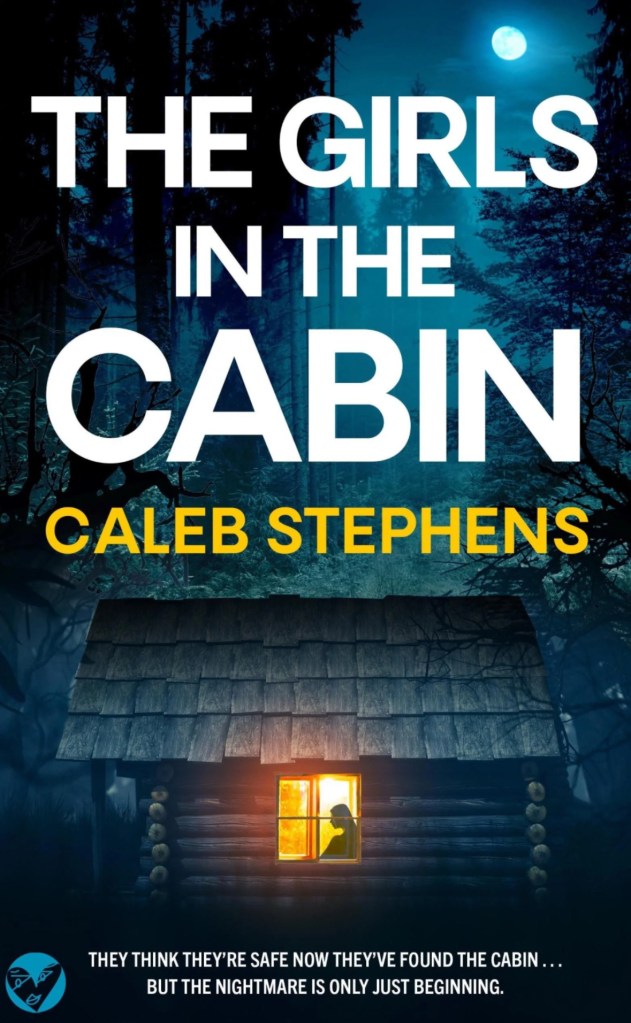
“Some prayers are answered by monsters wearing kindness like a borrowed skin.”
Caleb Stephens’ The Girls in the Cabin (2023) is a viscerally unsettling descent into psychological and physical horror that weaponizes the Colorado wilderness as a theater of primal terror. Winner of the “Best Psychological Thriller” in the 2023 Best Thriller Book Awards , the novel traps grieving widower Chris and his daughters—resentful teen Kayla and mute, traumatized Emma—in a blizzard-ravaged farmstead with Clara, a woman whose maternal hospitality masks a fractured psyche and a history of grotesque abuse. Stephens masterfully stitches together themes of familial guilt, inherited trauma, and the monstrous cost of survival, evoking Misery‘s claustrophobic dread and Texas Chainsaw Massacre‘s rural grotesquerie .
Narrative Architecture: Isolation as an Incubator for Madness
The novel’s power derives from Stephens’ surgical control of pacing and perspective. The first act—detailing Emma’s leg-shattering fall and the family’s struggle through a storm—immerses readers in survivalist desperation, leveraging the Colorado Flat Tops’ indifferent beauty as both setting and antagonist . Clara’s farmstead initially radiates refuge, but Stephens seeds unease through decaying details: hoarded trash, ill-fitting clothes, and the hulking presence of Billy, Clara’s intellectually disabled son whose childlike tenderness contrasts with his brute strength . The narrative alternates between Chris’s escalating panic and Clara’s harrowing backstory—revealed through flashbacks of paternal rape, maternal betrayal, and the birth of her dissociative alter ego, Sydney, a feral protector forged in childhood trauma . This dual timeline transforms the farmhouse into a psychological pressure cooker, where Clara’s fractured identity and Chris’s paternal failures collide.
Character Alchemy: Sympathy and Monstrosity Intertwined
- Chris’s Redemption Arc: His quest to salvage his family post-wife’s cancer death is riddled with selfishness and guilt (particularly a past betrayal Kayla cannot forgive). His physical struggle—carrying Emma with a dislocated shoulder—mirrors his emotional burden, making his transformation into a primal protector compelling .
- Clara/Sydney: Trauma’s Twin Faces: Clara’s vulnerability—her yearning for the “perfect family” she never had—invites pity, while Sydney’s sadism (graphically manifested in eye-gouging, bone-breaking, and psychological torture) embodies vengeance against her abusers. Stephens avoids caricature by grounding their duality in neurological survival mechanisms, though the “evil alter” trope risks stigmatizing DID .
- Billy: The Tragic Weapon: Clara’s son emerges as the novel’s moral core—a manipulated innocent whose love for his mother conflicts with his dawning horror at her actions. His fate underscores the novel’s central tragedy: violence as a generational heirloom .
Horror Mechanics: Body Horror Meets Gothic Trauma
Stephens excels in set-piece brutality:
- A visceral eyeball extraction with rusted pliers merges body horror with psychological violation .
- Emma’s captivity in a barn “surgery” room, strewn with remains of Clara’s previous victims, echoes Saw’s grotesque inventiveness .
- Sydney’s rituals—forcing Chris to choose which daughter to sacrifice—pervert maternal love into sadistic theater .
Yet the true terror lies in Stephens’ exploration of complicity. Chris’s initial dismissal of Kayla’s suspicions (“We have no choice”) mirrors society’s blindness to abuse festering in plain sight .
Controversies and Flaws: The DID Trope and Pacing
The novel stumbles in its handling of mental illness. While Clara’s trauma is rendered with empathy (her father’s rape, her mother’s complicity), Sydney’s portrayal as a predatory “split personality” reinforces harmful stereotypes about DID, despite Chris’s speculative diagnosis . Structurally, the farmstead’s revelation delays peak tension; earlier arrival could amplify dread . The climax’s sentimental turn—contrasting with preceding brutality—feels tonally jarring, though Billy’s arc provides emotional resonance .
Literary Context and Why It Resonates
Stephens joins modern horror-thriller auteurs like Paul Tremblay and Jennifer McMahon, blending domestic drama with folk horror. His critique of toxic familial legacies—Clara reenacting her abuse on Chris’s family—mirrors Gothic traditions where houses metabolize trauma . For agents and publishers, note Stephens’ commercial precision:
- Setting as Character: Colorado’s wilderness shifts from sublime to sinister, enhancing thematic isolation .
- Hybrid Genre Appeal: Psychological depth for thriller readers, splatterpunk intensity for horror fans .
- Moral Ambiguity: Chris’s flawed heroism and Clara’s victim/villain duality defy easy archetypes .
Content Warnings: Graphic child abuse, sexual violence, gore, animal cruelty, and self-harm permeate the narrative. Recommended for readers steeled for uncompromising darkness .
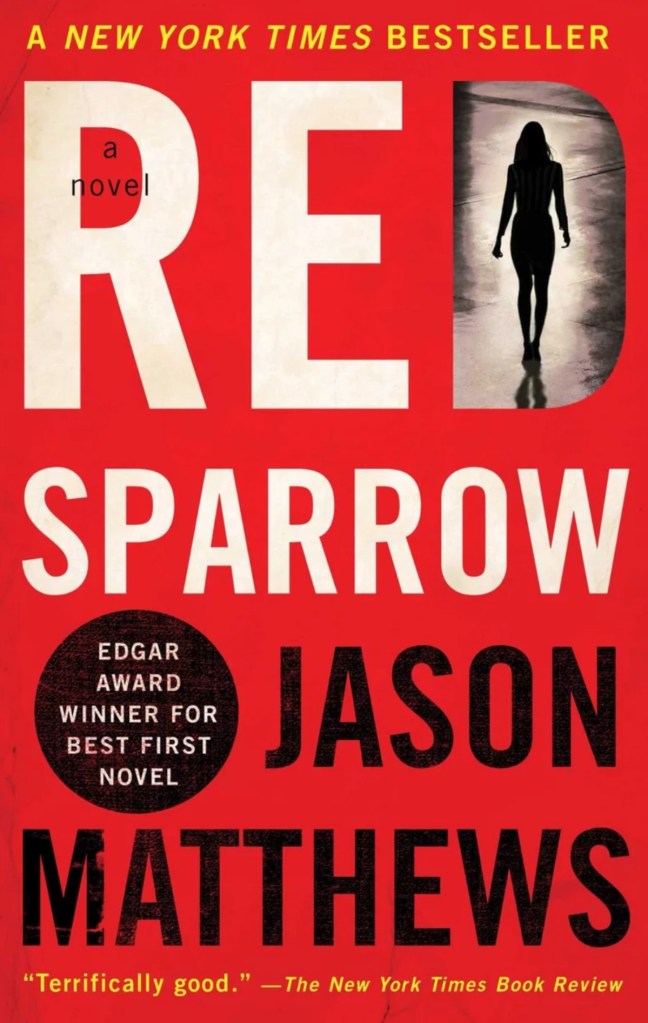
“In Russia, your body belongs to the state. The sooner you accept this, the easier your life becomes.”
Jason Matthews’ Red Sparrow (2013) is a visceral, unflinching plunge into the shadow world of post-Soviet espionage, where the line between seduction and survival blurs into oblivion. Written by a 33-year CIA veteran, this debut novel—the first in a trilogy—transcends conventional spy fiction by weaving forensic tradecraft, geopolitical tension, and psychological warfare into a narrative as chilling as it is authentic . For literary agents and publishers evaluating high-stakes storytelling, Matthews’ fusion of institutional expertise and audacious narrative risks—including 41 recipes punctuating chapters—positions Red Sparrow as a modern heir to John le Carré, with the lurid intensity of a Thomas Harris thriller .
The Alchemy of Betrayal: Plot as a Labyrinth of Mirrors
At its core, Red Sparrow is a harrowing exploration of identity erosion. Dominika Egorova, a prima ballerina for the Bolshoi Ballet, suffers a career-ending injury orchestrated by a rival dancer. Faced with destitution and her mother’s mounting medical bills, she is coerced by her uncle, Colonel Ivan “Vanya” Egorov (a Putin-esque SVR spymaster), into joining the “Sparrow School”—a secret facility training agents in sexual manipulation . Matthews renders Dominika’s degradation with clinical precision: recruits endure psychological torture, forced nudity, and lessons in exploiting “targets’ weaknesses” under the icy gaze of “Matron” (Charlotte Rampling in the film adaptation) .
Dominika’s first assignment targets Nathaniel “Nate” Nash, a CIA handler exiled to Helsinki after compromising a high-level Russian mole codenamed “MARBLE” . What follows is a dizzying game of triple-bluff:
- Honey Trap or Heart?: Dominika and Nate’s cat-and-mouse dynamic evolves into a twisted romance, yet Matthews constantly subverts reader trust. Is Dominika manipulating Nate to uncover MARBLE? Is Nate recruiting her as a CIA asset? The ambiguity climaxes in a floppy-disk exchange scene where Dominika must betray either her country or her conscience .
- The Synesthesia Twist: Dominika’s secret ability to see “auras”—colors revealing emotions and lies—elevates her from pawn to clairvoyant strategist. A crimson aura signifies deception; silver denotes nobility. This gimmick, initially jarring, becomes the novel’s masterstroke, visualizing espionage’s inherent duplicity .
- Putin’s Shadow: The real Russian president looms as a “blond scorpion,” his SVR leveraging kompromat against a corrupt U.S. senator (shades of real-life political scandals) .
Narrative Innovations: Recipes and the Relentlessness of Reality
Matthews’ boldest flourish—recipes closing each chapter—transforms the novel into a sensory archive of spy culture. Dishes like “Sparrow School Tokmach Soup” and “Caviar Blini” serve multiple functions:
- Cultural Anchors: Recipes authenticate settings (Moscow’s gloom, Helsinki’s bistros) while contrasting Russian austerity with Western excess .
- Metaphors for Manipulation: Just as ingredients disguise poison, spies cloak intentions in allure. A recipe for “Poisoned Chocolates” chillingly mirrors Dominika’s training .
- Humanizing Relics: In a world of betrayal, cooking becomes Dominika’s tether to autonomy. Critics dismissed this device as gimmicky, but it ironically grounds the novel’s grand cruelty in tactile detail .
Character as Contradiction: Dominika’s Dance on the Knife’s Edge
Matthews crafts Dominika as a feminist paradox—both victim of the patriarchy and its deadliest weapon:
- Agency Amid Exploitation: Forced into sex work by the state (“Your body belongs to Mother Russia”), she weaponizes her trauma, turning Sparrow techniques against her handlers. Her assassination of a traitorous general using a rigged elevator is a cathartic revolt .
- The Unromantic Spy: Unlike Bond girls or Atomic Blonde’s Lorraine Broughton, Dominika avoids glamorized empowerment. Her relationship with Nate simmers with mistrust, and Matthews denies them a Hollywood ending. Their final reunion in Budapest crackles with unresolved tension .
- Supporting Cast as Ideological Foils:
- Uncle Vanya: Embodies post-Soviet rot—ruthless yet emotionally brittle. His fate underscores Matthews’ theme: loyalty to the state consumes all .
- MARBLE: The mole’s identity (revealed mid-novel) forces Dominika to confront systemic corruption, mirroring real-world whistleblower dilemmas .
Authenticity vs. Exploitation: The CIA Insider’s Dilemma
Matthews’ CIA tenure bleeds into every page, gifting the novel unparalleled verisimilitude but also ethical quandaries:
- Tradecraft as Poetry: Dead drops, brush passes, and “canary traps” unfold with nail-biting precision. A sequence where Dominika detects surveillance via subway reflections reads like a classified manual .
- Graphic Violence as Political Statement: Scenes of torture (e.g., a skin-grafting machine repurposed for interrogation) critique institutional dehumanization. Yet some readers accused Matthews of reveling in savagery, particularly toward female bodies .
- The “American Exceptionalism” Trap: While Matthews exposes Russian brutality (Sparrow School’s atrocities), he avoids absolving the West. Nate’s CIA exploits renditions, and the senator subplot reveals U.S. political venality .
Legacy and Adaptations: Why the Book Outsoars the Film
Francis Lawrence’s 2018 film adaptation, starring Jennifer Lawrence, distilled the novel’s complexity into a lurid, divisive spectacle: ElementNovel (Matthews)Film (Lawrence)Critical ImplicationDominika’s Agency Calculus of survival; aura-driven choices Victim-centric; excessive nudity/torture Film prioritizes shock over psyche Nate Nash Charismatic manipulator Wooden foil (Joel Edgerton) Lack of chemistry undermines romance Sparrow Training Psychological dismantling “Whore school” titillation Film commodifies trauma Ending Ambiguous; Dominika’s allegiance unresolved Simplified “twist” Novel’s moral complexity neutered
The novel’s richer texture—particularly Dominika’s synesthesia and recipes—was jettisoned for Hollywood brutality, leading critic Roger Ebert to decry its “gratuitous exploitation” . Yet Matthews’ prose remains the superior vessel for the story’s geopolitical heft.
Literary Context: A Bolt from the Blue in Spy Fiction
Red Sparrow revitalized the American espionage thriller by merging le Carré’s moral ambiguity with Forsyth’s procedural rigor . Its distinctions:
- Anti-Bond Sensibility: No gadgets or martinis—only compromised souls trading dignity for secrets.
- The Putin Doctrine: Written pre-2016 election, it presciently framed Russian interference as human-centric (honey traps, blackmail) versus cyber warfare .
- Genre Hybridity: Blending thriller pacing with literary devices (recipes, auras) attracted crossover audiences, though some purists bristled .
The Verdict: A Flawed but Essential Descent into Darkness
Red Sparrow is not without flaws. Pacing sags in the second act as tradecraft minutiae overwhelms tension, and Matthews’ prose occasionally veers into pulp (“breasts” references drew justified criticism) . Yet its triumphs overshadow stumbles:
- A Landmark Heroine: Dominika predated #MeToo but embodies its rage—a woman weaponized by patriarchy who claws back power through ruthless intellect.
- Culinary Metaphysics: The recipes, initially dismissed, ultimately symbolize resistance—a reminder that even spies savor beauty amid horror.
- Authenticity as Art: Matthews’ CIA tenure gifted spy fiction its most credible canvas since The Spy Who Came in from the Cold.
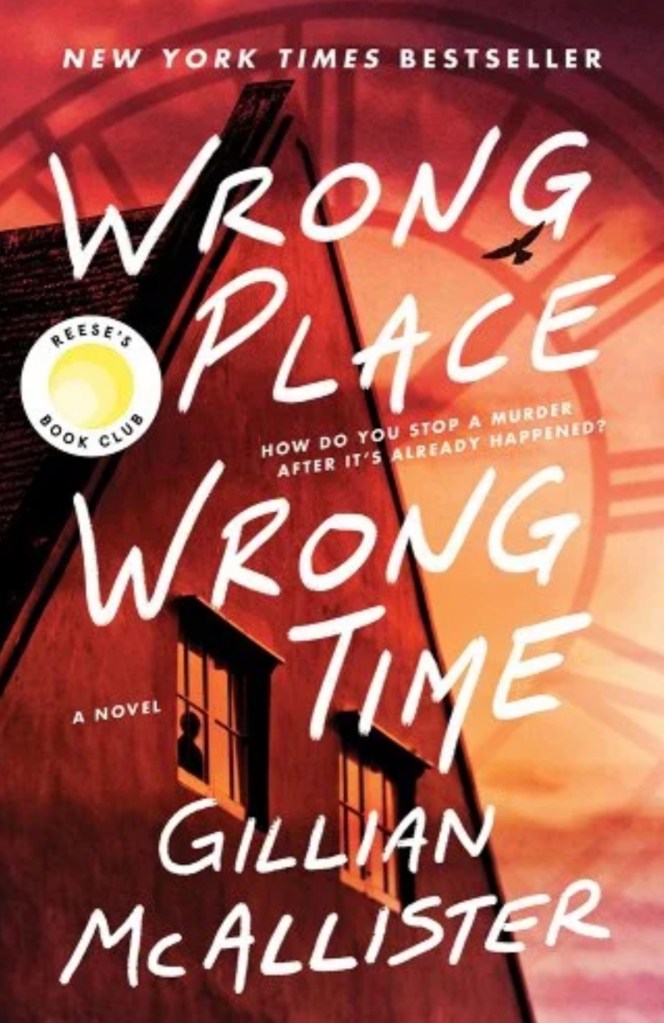
“How sinister it is to relive your life backward. To see things you hadn’t at the time. To realize the horrible significance of events you had no idea were playing out around you.”
Gillian McAllister’s Wrong Place, Wrong Time (2022) reinvents the psychological thriller through a masterful temporal labyrinth, where a mother’s quest to prevent her son’s crime becomes a haunting excavation of guilt, love, and the fragile architecture of family. Selected for Reese Witherspoon’s Book Club and lauded as “perfection, every word, every moment” by Lisa Jewell , this novel transcends genre conventions by merging Groundhog Day‘s existential recursion with the emotional brutality of domestic noir. Jen, a sharp-witted lawyer, witnesses her 18-year-old son Todd stab a stranger outside their home—only to wake up the previous day, then weeks, then decades before the murder, trapped in a backward spiral through time . McAllister weaponizes this reverse chronology not as sci-fi gimmickry but as a psychological scalpel, dissecting how secrets calcify beneath the surface of ordinary lives.
Narrative Architecture: Time as a Mirror
McAllister’s genius lies in structuring the novel like a reverse criminal investigation. Each chapter plunges Jen further into the past (“Day Minus 1,” “Day Minus 387”), forcing her to reinterpret mundane moments as harbingers of catastrophe . A forgotten argument over curfew, a missed parent-teacher conference, a stranger’s glance at a train station—all gain lethal significance when viewed backward. Unlike traditional time-loop narratives, Jen’s journey isn’t circular but linear into the past, evoking Memento‘s fractured suspense . The device amplifies McAllister’s themes:
- The Illusion of Control: Jen’s legal training—reliant on evidence and logic—fails her as notes vanish and allies reset daily. Her only tools are maternal intuition and fractured memories .
- Parental Guilt as Prison: As Jen revisits Todd’s childhood, she agonizes over perceived failures: working late, missed school plays, a forgotten nursery pickup. McAllister gut-punches readers with the universal terror of “what if my choices broke my child?” yet ultimately absolves Jen, arguing that love, not perfection, defines parenthood .
The backward momentum crescendos in a revelatory third act where Jen’s past collides with Todd’s victim—exposing a decades-old conspiracy that redefines the murder as an act of twisted protection .
Character Alchemy: Jen as an Antiheroine of Empathy
Jen shatters the “perfect mother” trope. She’s impatient, work-obsessed, and often blind to her son’s struggles, yet her ferocity feels profoundly human. McAllister avoids saintly martyrdom; instead, Jen’s flaws—her quick temper, her marital resentments—make her redemption arc visceral . Supporting characters orbit her with Hitchcockian ambiguity:
- Kelly (Husband): His initial dismissal of Jen’s time-travel distress mirrors societal gaslighting of maternal intuition. Yet his evolution from skeptic to ally grounds the surreal plot .
- Ryan (Cop): His parallel storyline—investigating a cold case—intersects Jen’s journey in a gasp-inducing twist that reframes Todd’s victim as neither random nor innocent .
- The Victim: His identity, revealed late, forces Jen to confront complicity in systems larger than her family. McAllister subtly critiques class and justice, asking who society deems “grievable” .
Thematic Resonance: Motherhood as Time Travel
At its core, the novel is a metaphysical manifesto on motherhood. Jen’s backward odyssey mirrors every parent’s retrospective anguish: Could I have stopped this? What did I miss? McAllister argues that parenting is inherently a form of time travel—revisiting childhood wounds through our children’s eyes, fearing futures we can’t control . The title’s irony gut-punches: the “wrong place” isn’t the crime scene but Jen’s belief she failed; the “wrong time” is every moment she blamed herself instead of seeking truth .
Literary Flaws and Triumphs
While the premise dazzles, McAllister stumbles briefly:
- Pacing Whiplash: Early sections drag as Jen tests time-travel rules (e.g., scribbling notes that vanish). Some readers cite “50 pages of slog” before the plot detonates .
- Overwritten Tics: Commas proliferate unnaturally (“And, right then, it had felt, suddenly, like spring”), distancing readers from tension .
- Eye-Roll Forensics: A pivotal clue—identifying a killer’s eye color through a window—strains credibility .
Yet these fade against McAllister’s triumphs: - Emotional Payoffs: Jen’s reunion with her deceased father in the past is a tear-sodden masterpiece of understated grace .
- The “Page 190” Phenomenon: Readers widely hail this mid-novel twist—linking Todd’s crime to Jen’s legal past—as “mind-blowing” .
- Ambiguous Ending: Jen’s return to the murder moment offers hope without guarantees, honoring thriller conventions while rejecting tidy catharsis .
Why Literary Professionals Should Take Note
For agents and publishers, Wrong Place, Wrong Time exemplifies commercial-literary alchemy:
- Voice as Hook: Jen’s wry, panicked narration (“This isn’t time travel—it’s torture“) instantly bonds readers to the absurd .
- Structure as Innovation: Reverse chronology demands meticulous plotting. McAllister’s blueprint—where every mundane detail becomes a Chekhov’s gun—offers a masterclass in suspense architecture .
- Theme as Bridge: It transcends thriller demographics by speaking to parents, true-crime addicts, and zeitgeist anxieties about “failing” our children .
The novel sold explosively (29% of 430,000+ Goodreads ratings are 5-star) not despite its time-travel element but because of it—proving high-concept daring, when rooted in emotional truth, can electrify the genre .
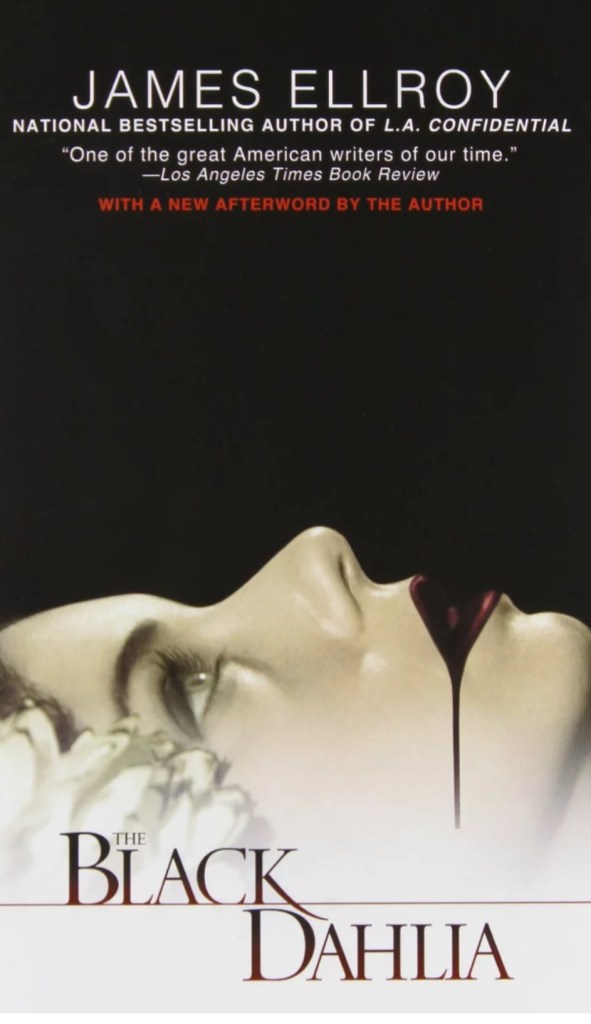
“To Geneva Hilliker Ellroy 1915-1958 Mother: Twenty-nine Years Later, This Valediction in Blood.”
James Ellroy’s The Black Dahlia (1987) is less a crime novel than a gothic exorcism in ink, transforming the unsolved 1947 murder of Elizabeth Short into a labyrinthine descent into postwar Los Angeles’s festering soul. The dedication—a blood oath to Ellroy’s own murdered mother—anchors the narrative in visceral trauma, blurring lines between historical fiction and psychosexual confession . As the inaugural entry in Ellroy’s L.A. Quartet, the novel eschews whodunit conventions to dissect institutional rot, voyeuristic complicity, and the violence of collective mythmaking. For literary agents and publishers, this work remains a masterclass in how noir can transcend genre to become cultural autopsy .
Narrative Architecture: Trauma as Protagonist
Ellroy constructs the novel as a dual autopsy: one of Short’s mutilated body, the other of the city that devoured her. Through the eyes of Dwight “Bucky” Bleichert—an LAPD detective grappling with guilt over betraying Japanese-American friends during the Zoot Suit Riots—the investigation becomes a mirror for his own moral decay . The real Elizabeth Short’s biography (a 22-year-old aspiring actress lured by Hollywood’s false promise, last seen at the Biltmore Hotel) is meticulously rendered, yet Ellroy weaponizes her anonymity. Short haunts the text as an absence, her voice erased by tabloids that dubbed her “The Black Dahlia” for her black attire and the film The Blue Dahlia . In Ellroy’s hands, this nickname metastasizes into a symbol of media exploitation: reporters manipulate Short’s grieving mother, fabricate lesbian love triangles, and reduce her corpse to sensational fodder . The novel’s structure mirrors this fragmentation—nonlinear timelines collide with police transcripts, coroner reports, and Bucky’s feverish hallucinations, culminating in a revelation that the killer hid within the Sprague family’s incestuous secrets .
The City as Crime Scene: Noir’s Necropolis
Postwar Los Angeles emerges as Ellroy’s true antagonist—a “hotbed of political corruption and depravity” where Wild West lawlessness masquerades as modernity . The vacant lot at 3825 South Norton Avenue, where Short’s bisected body was discovered (“posed like a surrealist artwork” with a Glasgow smile carved into her face), becomes a psychic wound in the city’s geography . Ellroy populates this landscape with grotesques:
- Madeleine Sprague: A socialite whose resemblance to Short fuels Bucky’s obsession, luring him into a sadomasochistic affair that mirrors the city’s sickness.
- Lee Blanchard: Bucky’s partner, whose vigilante justice masks childhood trauma, exposing the LAPD’s thin veneer of heroism.
- Ramona Sprague: The true killer, whose anatomical mutilation of Short (“Only a surgeon could have killed her”) critiques the era’s medicalized misogyny .
Table: Historical Fact vs. Ellroy’s Noir Alchemy ElementReal Case (1947)Novel’s Fictional ResolutionLiterary FunctionElizabeth Short Obscure aspirant; media-sensationalized Madeleine’s doppelgänger; psychic void Exposes commodification of female victims Murder Site Vacant lot, 3825 S. Norton Ave Tilden’s shack on Sprague property Maps corruption to wealth/power Investigation 500+ suspects; no arrests Bucky’s extralegal vengeance Rejects institutional justice Killer’s Identity Never proven (theories: Hodel, others) Ramona Sprague (matriarch as monster) Gothicizes familial rot
Stylistic Brutality: Language as Weapon
Ellroy’s prose operates like a switchblade to the gut—terse, rhythmic, and drenched in period slang (“hoo-hah,” “jacket”). Sentences fragment under emotional weight: “She laughed. I stared. The scar grinned.” This staccato brutality mirrors the novel’s themes: Bucky’s first-person narration descends from detached cynicism into near-psychotic breaks, culminating in his execution of the disfigured handyman Tilden . Ellroy’s genius lies in making readers complicit; when Bucky fantasizes about Madeleine as Short during sex, the scene forces confrontation with our own voyeurism . Historical details—the gasoline-wiped evidence package sent to the Los Angeles Examiner, the recovered purse in a dumpster—are repurposed as metaphors for erasure, questioning whether truth can ever be recovered from institutional decay .
Legacy and Literary Context: Noir’s Unquiet Grave
The Black Dahlia redefined neo-noir by infusing it with historiographic metafiction. Unlike Raymond Chandler’s romanticized LA (The Big Sleep), Ellroy’s city is a necropolis where cops, studios, and politicians feast on corpses . The novel’s enduring power—amplified by the 2006 film adaptation—stems from its refusal of closure. While Ellroy “solves” Short’s murder fictionally, the ending underscores futility: Bucky is fired, Madeleine institutionalized, and the Dahlia’s case remains officially open . In 2024, renewed interest in evidence (including a theorized link to George Hodel) proves the novel’s core thesis: unsolved violence infects collective memory, demanding perpetual re-excavation .
Why This Novel Matters for Literary Professionals
For writers crafting book proposals, note Ellroy’s orchestration of:
- Voice as Atmosphere: Bucky’s jargon-heavy narration (“redball case,” “hat squad”) builds world without exposition.
- Moral Ambiguity as Engine: Every character embodies contradiction—Lee’s heroism masks criminality; Bucky’s integrity fuels atrocity.
- Research as Revelation: Ellroy’s integration of real evidence (e.g., the Man Ray-inspired posing) transforms pulp into cultural critique .
The Black Dahlia remains required reading not for its resolution, but for its ruthless exposure of how society weaponizes dead women. As Bucky admits: “I never knew her. None of us did. We made her up.” In an era of true-crime commodification, Ellroy’s masterpiece warns: the stories we tell about victims often repeat the crime .

“Man, when you lose your laugh you lose your footing—especially when you let a woman whup you down till you can’t laugh no more. That’s what makes life in her damn institution so damn dreary.”
Ken Kesey’s One Flew Over the Cuckoo’s Nest (1962) is a seismic explosion of countercultural rage and tragic heroism, narrated through the hallucinatory lens of Chief Bromden—a half-Native American patient feigning deafness in an Oregon psychiatric ward. This groundbreaking novel transcends its asylum setting to dissect the soul-crushing machinery of conformity in Cold War America, where Nurse Ratched’s tyrannical rule symbolizes the dehumanizing “Combine” of societal control . For literary agents and publishers evaluating timeless social critique, Kesey’s debut remains a masterclass in voice, symbolism, and the high cost of resistance.
Narrative Alchemy: Bromden’s Fog as America’s Conscience
Kesey’s revolutionary stroke was entrusting the narration to Bromden, whose “deaf and dumb” facade masks acute perception. His visions of mechanical “fog” and dehumanizing machinery (“the Combine“) transform the ward into a microcosm of 1950s America—a place where individuality is pathologized and dissent crushed . Bromden’s paranoia isn’t mere delusion; it’s clairvoyance. He witnesses Ratched’s psychological torture: group “therapy” sessions weaponizing shame, enforced medication, and electroshock punishments. His voice—lyrical, fractured, and haunting—elevates the novel from protest literature to mythic tragedy .
The War of Symbols: McMurphy vs. The Machine
At the novel’s heart burns the collision between Randle Patrick McMurphy, a gambler and statutory rapist faking insanity to avoid prison labor, and Nurse Ratched, whose “starched white uniform” and “calm, beautiful face” mask surgical cruelty . Their battle is waged through visceral symbols:
- Laughter as Rebellion: McMurphy’s raucous humor—blackjack games, basketball protests, and fishing expeditions—becomes spiritual warfare against Ratched’s sterile order. His poker games aren’t mere distractions; they’re rehearsals for autonomy, teaching broken men to “grow back guts” .
- The Matriarch as Castrator: Ratched’s concealed breasts and emasculating dominance embody Kesey’s controversial gothic misogyny. Her power derives from denying sexuality, reducing men to “weak, helpless, dependent” children . McMurphy’s final assault—ripping her uniform open—isn’t just violence; it’s a grotesque “revelation” of femininity meant to shatter her authority .
- The Lobotomy as Ultimate Conformity: McMurphy’s transformation into a vegetative shell after lobotomy isn’t defeat—it’s martyrdom. His sacrifice ignites Bromden’s escape, symbolizing hope’s persistence even when heroes fall .
Controversies: The Rot Beneath the Rebellion
Modern readers rightly recoil at the novel’s toxic undercurrents:
- Racist Caricatures: Orderlies are reduced to “black boys” with “slate” faces, their brutality amplified by racial stereotypes. McMurphy’s climactic fight erupts with racial slurs (“Goddamned motherfucking nigger“), framing white violence as heroic .
- Misogyny as Theme: Women are either castrating “matriarchs” (Ratched, Billy Bibbit’s mother) or redemptive sex objects (prostitute Candy). Billy’s suicide after Ratched threatens to tell his mother about his sexual encounter underscores Kesey’s reductive view of female power .
- Mental Health Simplification: While exposing asylum abuses, Kesey romanticizes McMurphy’s “psychopathy” and reduces patients to types—the stuttering Billy, anxious Harding, catatonic Ruckly—neglecting nuanced mental illness portrayals .
Literary Innovations & Flaws
- Strengths:
- Voice as Revolution: Bromden’s poetic delirium merges Native American imagery with industrial horror, predicting magical realism’s rise .
- Symbolic Density: Every detail resonates—Ratched’s “too-big” breasts represent repressed femininity; the fog signifies surrender to oppression .
- Therapeutic Absurdity: Group sessions where patients betray each other prefigure Foucault’s critiques of institutional “discipline” .
- Weaknesses:
- Pacing Whiplash: Early sections drag before McMurphy’s arrival; side characters (e.g., Cheswick) vanish without narrative weight .
- Ethical Myopia: Kesey’s LSD advocacy bleeds into glorifying McMurphy’s destructive charisma, ignoring real-world consequences .
Legacy: Why Agents & Publishers Should Revisit This Text
Despite flaws, Cuckoo’s Nest endures as a cultural litmus test. Its seismic influence spans:
- Narrative Voice: Bromden’s unreliable perspective paved the way for postmodern trauma narratives like Slaughterhouse-Five .
- Institutional Critique: The novel’s exposure of asylum abuses fueled mental health reforms, paralleling Goffman’s Asylums (1961) .
- Adaptation Paradox: Kesey despised the Oscar-winning film for centering McMurphy over Bromden—proof of literature’s unique power to channel marginalized voices .
Table: Novel vs. Film—Key Divergences ElementNovel (Kesey)Film (Forman)ImpactNarrator Bromden’s interiority drives the plot Bromden marginalized; McMurphy centered Novel critiques systemic oppression; film lionizes individualism Ratched’s Motive Explicit matriarchal tyranny Bureaucratic efficiency Novel’s misogyny diluted; villainy humanized Dr. Spivey Ratched’s puppet; McMurphy’s pawn Nearly omitted Novel underscores institutional complicity Ending Bromden escapes, carrying McMurphy’s spirit Bromden escapes alone Novel affirms communal resilience; film isolates heroism
Final Note: Pair with Sylvia Plath’s The Bell Jar (1963) for complementary critiques of institutional gaslighting, or Chuck Palahniuk’s Fight Club (1996) for its spiritual heir in toxic masculinity’s war on modernity .

“Faith is universal. Our specific methods for understanding it are arbitrary. Some of us pray to Jesus, some of us go to Mecca, some of us study subatomic particles. In the end we are all just searching for truth, that which is greater than ourselves.”
Dan Brown’s Angels & Demons (2000)—the inaugural Robert Langdon thriller—ignited a global phenomenon by weaponizing history, symbology, and high-stakes suspense into a narrative that sold over 200 million copies and redefined the religious conspiracy genre . Set against the backdrop of a Vatican under siege, the novel pits Harvard symbologist Langdon against the resurgent Illuminati, who have planted an antimatter bomb to annihilate the Catholic Church during papal conclave. With its breakneck pacing and audacious blend of quantum physics and Renaissance art, Brown’s opus remains a masterclass in commercial storytelling—flawed yet phenomenally influential .
Narrative Architecture: A 24-Hour Race Through History’s Shadows
Brown structures the novel as a chronometric pressure cooker: Langdon and physicist Vittoria Vetra must decode a 400-year-old trail of Illuminati clues across Rome to locate the bomb before it annihilates Vatican City. The narrative hurtles through sealed crypts, Bernini sculptures, and the Vatican Secret Archives—all rendered with tactile precision that transforms tourism into tension . Brown’s signature device—short chapters ending in cliffhangers—propels momentum, though critics note its mechanical reliance on false reveals (e.g., Langdon withholding solutions to prolong suspense) . The 24-hour timeframe strains credulity, compressing complex historical expositions (e.g., Galileo’s persecution, ambigram linguistics) into breathless intervals. Yet this very improbability fuels the thriller’s engine, mirroring Langdon’s own disbelief: “This is impossible!” .
Thematic Grit: Science vs. Religion as Spectator Sport
At its core, Angels & Demons interrogates the eternal conflict between empirical reason and spiritual faith. The Illuminati—born from Galileo’s suppression—embody vengeance against institutional dogma, while Cardinal Strauss articulates the Church’s counterargument: “Science can heal, or kill. It depends upon the soul of the man wielding the scalpel” . Brown’s genius lies in commodifying this debate into accessible tropes:
- Antimatter becomes both divine metaphor (creation ex nihilo) and WMD .
- Bernini’s “Ecstasy of Saint Teresa” doubles as a coded map, sacralizing art as a weapon .
- The camerlengo’s zealotry exposes faith’s capacity for corruption .
Yet the novel’s scholarship draws fire. Historians decry inaccuracies, from Illuminati timelines to Vatican protocols. Brown sidesteps rigor, prioritizing narrative alchemy over facts—a choice that magnetizes readers despite academia’s scorn .
Character as Function: Langdon’s Brain, Vittoria’s Body
Langdon emerges as a cerebral archetype: tweedy, claustrophobic, and armed with encyclopedic recall. His appeal resides in intellect-as-superpower, though emotional depth remains scarce . Vittoria Vetra, meanwhile, suffers from Brown’s reductive tendencies: introduced as a brilliant CERN scientist, she swiftly degrades into a “comely” plot accessory noted for her “tank top” and “smooth legs” . The Hassassin—a sadistic enforcer—leans into cartoonish villainy, his atrocities sanitized by Brown’s clinical prose (e.g., branded cardinals, eyeball theft) . Only Camerlengo Carlo Ventresca transcends trope: his tragic fanaticism—fueled by trauma and messianic complex—delivers the novel’s sole psychological twist .
Prose and Pacing: The Double-Edged Scalpel
Brown’s writing oscillates between pedestrian and pulse-pounding. Descriptions of Rome’s architecture mesmerize (“The Vatican’s Pietà seemed to glow as if lit from within“), while dialogue often clunks (“I prefer the term ‘historical conjecture’“) . The much-maligned anti-matter lecture typifies this duality: a 10-page physics primer that halts momentum but grounds the stakes . Yet Brown’s structural rhythm—alternating action set-pieces with historical dives—proves addictive. Scenes like Langdon’s oxygen-deprived crawl through the Archivum Secretum fuse pedagogy with panic, making readers forgive expositional sins .
Cultural Impact: From Page to Global Phenomenon
Angels & Demons catalyzed a publishing revolution. Its fusion of highbrow hooks (art history, physics) with airport-paperback pace spawned imitators like The Rule of Four and Steve Berry’s Cotton Malone series . The 2009 Ron Howard film adaptation, while diverging significantly (see table below), amplified its reach—despite Brown’s fans lamenting the erasure of Langdon’s interiority and Vittoria’s agency .
Table: Key Divergences Between Novel and Film ElementNovel (2000)Film (2009)ImpactVittoria Vetra Scientist with tragic backstory Reduced to action sidekick Diminished thematic resonance CERN Subplot Detailed anti-matter creation Minimized for pace Erodes story’s scientific gravitas Hassassin Graphic violence/sexual menace Sanitized as generic henchman Lowers stakes, dilutes menace Conclusion Ambiguous survivor guilt Heroic victory parade Sacrifices moral complexity for closure
The Verdict: Why Agents and Publishers Should Revisit This Text
For literary professionals, Angels & Demons offers indispensable lessons:
- Voice as Worldbuilding: Langdon’s professorial tone—flaws notwithstanding—immerses readers in niche lexicons (symbology, iconology) without prerequisite expertise .
- Structure as Hook: The “ticking clock” framework (literalized via bomb countdowns) forces narrative economy, proving that complexity thrives within constraints .
- Research as Spectacle: Brown’s touristic erudition—whether detailing the Path of Illumination or Vatican necropolitics—turns pedagogy into pageantry, inviting readers to mistrust history itself .
- Commercial Bravery: Rejecting genre silos, Brown fused thriller pacing with theological debate, creating a template for “smart popcorn” fiction that dominates bestseller lists .
Despite its sins—wooden romance, dubious scholarship, physicist-cum-supermodel tropes—Angels & Demons endures because it weaponizes curiosity. As Langdon muses: “The absence of proof is not proof of absence” . For writers and publishers alike, Brown’s debut whispers a potent truth: belief, once ignited, is the most explosive force of all.

“The most dangerous lies are those woven with threads of truth.”
Dan Brown’s The Da Vinci Code (2003) is a cultural detonation disguised as a thriller—a labyrinthine quest through art, history, and faith that sold over 200 million copies, sparked global theological debates, and redefined the “intellectual page-turner” . Merging Renaissance symbology with a breakneck chase across Europe, the novel follows Harvard symbologist Robert Langdon and cryptologist Sophie Neveu as they unravel clues hidden in Leonardo da Vinci’s masterpieces to expose a secret threatening the foundations of Christianity. For literary agents and publishers, this phenomenon offers masterclasses in narrative propulsion, controversial storytelling, and the alchemy of commercial genius—flaws and all .
Narrative Architecture: The Clockwork Thriller
Brown engineers his plot like a Swiss watch: every cog serves tension. When Louvre curator Jacques Saunière is murdered, his body arranged as Da Vinci’s Vitruvian Man with a cryptic message (“O, Draconian devil! Oh, lame saint!”), Langdon becomes the prime suspect . Teaming with Saunière’s estranged granddaughter Sophie, they flee through Paris, London, and Rosslyn Chapel, decoding puzzles embedded in:
- The Mona Lisa’s gender-ambiguous smile, reinterpreted as a self-portrait of Da Vinci
- The Last Supper’s “missing grail,” suggesting Mary Magdalene beside Jesus
- Fibonacci sequences and anagrammatic ciphers masking the Priory of Sion’s vault
Brown’s signature micro-chapters (110 in 454 pages) accelerate momentum, each ending with a cliffhanger that transforms curiosity into compulsion. Yet this structure risks exhaustion: by Act III, the “clue-chase-revelation” loop strains credulity, with Saunière’s elaborate deathbed riddles feeling contrived (Why not write a letter?) .
Characters as Conduits, Not Creations
Langdon and Sophie serve the plot, not psychology. Langdon—a “human Wikipedia” in tweed—exists to expound on ambigrams, sacred feminine iconography, and Vatican conspiracies . Sophie’s trauma (a family massacre linked to pagan rituals) surfaces only to justify her cryptology skills . The true standout is Sir Leigh Teabing, a wheelchair-bound historian whose zeal to unveil the “greatest cover-up in history” masks a villainous twist. His monologues—like a TED Talk on the Council of Nicaea’s suppression of goddess worship—distill Brown’s thesis: “History is always written by the winners” .
Fact or Fiction? The Controversy Machine
Brown’s audacity lies in blurring reality and invention. He prefaces the novel with a “Fact” page insisting “all descriptions of documents and secret rituals are accurate” . This framing ignited firestorms:
- Religious backlash: The Vatican condemned its depiction of Opus Dei (a real Catholic group) employing a self-flagellating assassin, Silas, to protect the “truth” of Christ’s marriage to Mary Magdalene .
- Scholarly ridicule: Historians debunked the Priory of Sion (presented as a millennia-old secret society) as a 20th-century hoax. Art experts scoffed at The Last Supper’s “female apostle,” noting Da Vinci’s John the Apostle was traditionally effeminate .
- Legal battles: Authors of Holy Blood, Holy Grail sued for plagiarism, citing parallels in their “Jesus lineage” theory. Brown won, arguing their work was itself speculative .
Yet these controversies fueled sales. Readers flocked to the Louvre, seeking Saunière’s crime scene; Da Vinci exhibitions saw record attendance. Brown tapped a post-9/11 craving for hidden order in chaos—even if that order was terrifying .
Prose: The Bestseller’s Achilles’ Heel
Critics eviscerate Brown’s style as “blockbuster pulp” :
- Clunky exposition: Langdon explains the Divine Proportion mid-car chase: “The number PHI is derived from the Fibonacci sequence!”
- Purple clichés: “Her eyes were emeralds of determination”; Silas’ albino skin “glowed like a ghost”
- Americanized Europeans: French detectives say “parbleu!” amid “God damn it!”
But defenders argue the prose’s simplicity democratizes complexity. A waitress in Ohio now Googles Rosslyn Chapel’s symbolism; a teen questions Constantine’s political motives. Brown makes esoterica addictive .
Legacy: The “Brown Effect” on Publishing
The Da Vinci Code reshaped the industry:
- Intellectual Thriller Boom: It spawned imitators (The Rule of Four, The Templar Legacy) and elevated “professor protagonists” (e.g., The Atlas Six) .
- Multimedia Integration: The illustrated edition—featuring photos of The Madonna of the Rocks and Westminster Abbey—sold millions, proving visuals enhance immersion .
- Controversy = Currency: Publishers now seek “debate-ready” books, knowing protests amplify reach (e.g., The Satanic Verses redux) .
- Tourism Synergies: Louvre visits rose 50% post-publication; Rosslyn Chapel’s revenue funded restorations .
Table: Critical Reception vs. Public Opinion AspectCritics’ VerdictReaders’ Response (2.4M+ Goodreads)Pacing “Manipulative cliffhangers” 70% 5-star ratings for “unputdownable” thrill Historical Accuracy “Egregious fabrications” “Made me research real history!” Character Depth “Cardboard cutouts” “Langdon is my dream professor!” Themes “Sunday School heresy” “Changed my view of Christianity”
The Verdict: Why Literary Professionals Must Study This Text
For agents and authors, The Da Vinci Code is a case study in calculated rebellion:
- Voice as Gateway: Langdon’s lectures on pagan symbolism or Gnostic gospels seduce readers into complex topics. Brown proves pedagogy need not be ponderous .
- Structure as Drug: The 2–3 page chapters create dopamine-loop reading, ideal for attention-starved audiences .
- Myth-Baiting: By positioning Christianity as “the ultimate conspiracy,” Brown leveraged millennia of folklore into a marketing juggernaut .
Flawed? Profoundly. Influential? Indelibly. As Sophie whispers, “Everyone loves a conspiracy” . In an age of misinformation, Brown’s triumph was understanding that the most potent stories are those we half-believe .
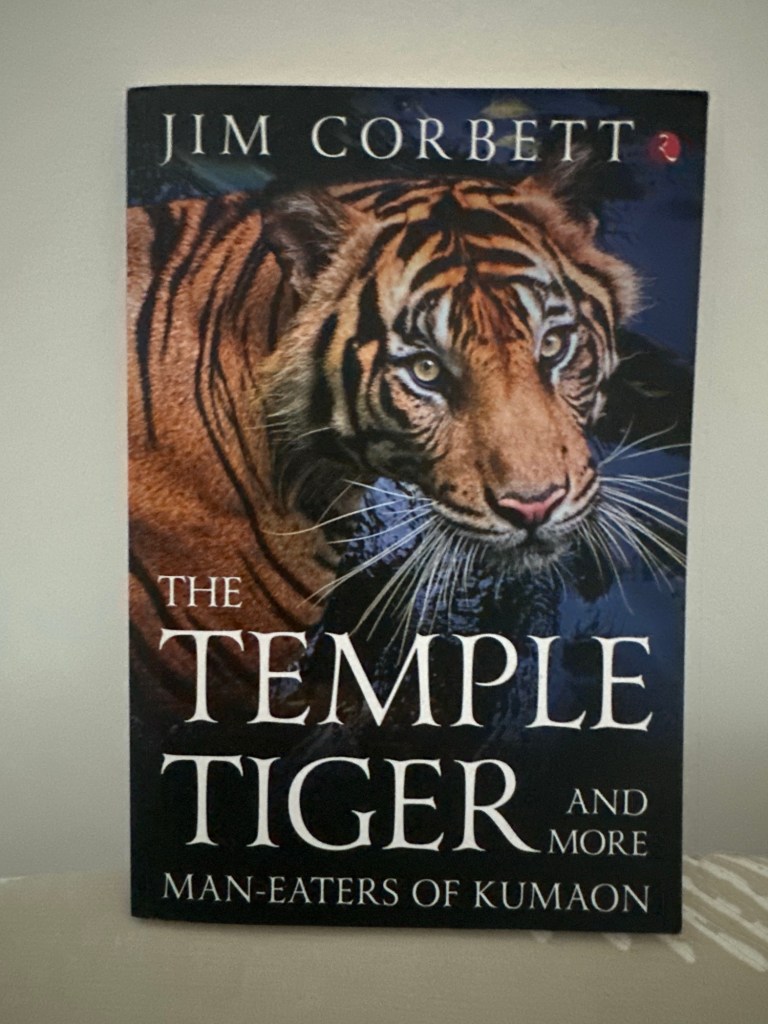
“To those who have never seen a leopard in his natural surroundings, I can only say that they can have no conception of his grace of movement and beauty of colouring, or the thrill of watching him.”
Jim Corbett’s The Jim Corbett Omnibus, Volume 1 is not merely a collection of hunting tales; it is a visceral journey into the soul of colonial India’s wilderness, where man and beast waged primal battles for survival. This compendium—featuring Man-Eaters of Kumaon (1944), The Temple Tiger (1954), and The Man-eating Leopard of Rudraprayag (1948)—transcends genre to become a masterclass in suspense, ecological empathy, and cultural anthropology. Corbett, an Anglo-Indian hunter-conservationist, documents his pursuit of 19 man-eating tigers and 14 leopards across Uttarakhand’s Kumaon and Garhwal regions between 1917–1938, weaving narratives that remain unparalleled in adventure literature .
The Hunter as Ecologist: A Paradox Unpacked
Corbett’s genius lies in reframing the hunter’s role as both savior and scholar. Each story dissects why big cats turn man-eater—never attributing malice, but injury, decay, or human encroachment. The Champawat tigress (436 kills) carried porcupine quills in her paws; the Rudraprayag leopard (125 kills) was likely wounded by a poacher’s trap . Corbett’s prose pulses with respect:
“A man-eating tiger is a tiger forced by circumstances beyond its control to adopt a diet alien to it. The wound is generally the result of a carelessly fired bullet or a thorn in the gut.”
His hunts emerge as ecological diagnostics—eliminating individual threats while advocating systemic preservation. Decades before modern conservation, he lobbied for India’s first tiger reserve (renamed Jim Corbett National Park in 1957) .
Narrative Alchemy: Jungle as Character
Corbett’s Uttarakhand is no backdrop; it’s a sentient, breathing entity. His descriptions merge scientific precision with poetic reverence:
- Sensory Immersion: Pre-dawn mist clinging to sal trees, sambar deer alarms echoing through ravines, the “sawing” call of a leopard .
- Cultural Tapestry: Villagers’ rituals to appease the “evil spirits” (man-eaters), like strewing pipal leaves or blowing conch shells .
- Suspense Architecture: Tracking the Rudraprayag leopard, Corbett spends nights perched over goat bait, listening to its “soft, owl-like call” in the rain—a 20-month odyssey condensed into nerve-wracking vignettes .
Table: Corbett’s Most Notorious Quarry in Volume 1 Man-EaterHuman KillsHunt DurationKey TacticsEcological InsightChampawat Tigress 436 4 weeks Footprints in blood-soaked soil; victim’s bracelet in stomach Gunshot wound festered; switched from game to humans Rudraprayag Leopard 125 20 months Goat bait; ambush on pilgrim trail Poacher injury; exploited human pathways Chowgarh Tigress & Cub 64 3 months Tree platforms (machans); coordinated drives Cub taught to hunt humans by mother Temple Tiger of Dabidhura Unknown 2 weeks Lure near shrine; night vigil Old age; unable to hunt natural prey
Ethical Contradictions: Colonial Lens, Kumaoni Heart
Corbett’s duality mirrors India’s colonial complexity:
- Empathy vs. Power: He condemns British sport-hunting (shikar) while wielding imperial privilege to access villages. His bond with locals transcends paternalism—he learns Kumaoni dialects, funds schools, and champions their courage .
- Violence as Mercy: Each kill is narrated with solemnity, not triumph. After felling the Panar leopard, he notes: “The expression on her face was one of relief, as if a burden had been lifted” .
- Gender Nuances: Corbett highlights female resilience—like the widow who baits a tiger with her own body to avenge her husband . Yet his era’s biases surface; villagers often appear as “simple folk” needing his protection .
Literary Craft: The Unadorned Thriller
Corbett’s prose, likened to “clear mountain water” by Ruskin Bond , revolutionized nature writing:
- Voice: First-person immediacy—“I felt eyes watching me”—blends understatement with unbearable tension.
- Pacing: Micro-chapters climax in heart-in-mouth encounters, like the Chowgarh tigress charging through gunfire .
- Symbolism: Robin, his terrier, embodies loyalty amid peril; the leopard’s phantom presence in Rudraprayag mirrors collective trauma .
Legacy: Conservation’s Contradicted Pioneer
Modern critiques note omissions: tribal knowledge is rarely cited; hunting’s ethics remain unsettled. Yet Corbett’s impact is indelible:
- Wildlife Photography: His lens captured tigers pre-kill, revealing their majesty .
- Influence: Ruskin Bond, Valmik Thapar, and modern ecologists cite him as inspiration .
- Cultural Bridge: His writings, translated into 27 languages, made Uttarakhand’s ecology global lore .
Pair With: The Corbett Papers (2023) for archival letters , or The Tiger by John Vaillant for modern parallels.
 V B John