
Unfiltered &Tender
My Latest Posts
• • •
- Forgotten Hero of Indian Cricket
Eden’s Ecstasy and Johannesburg’s Agony
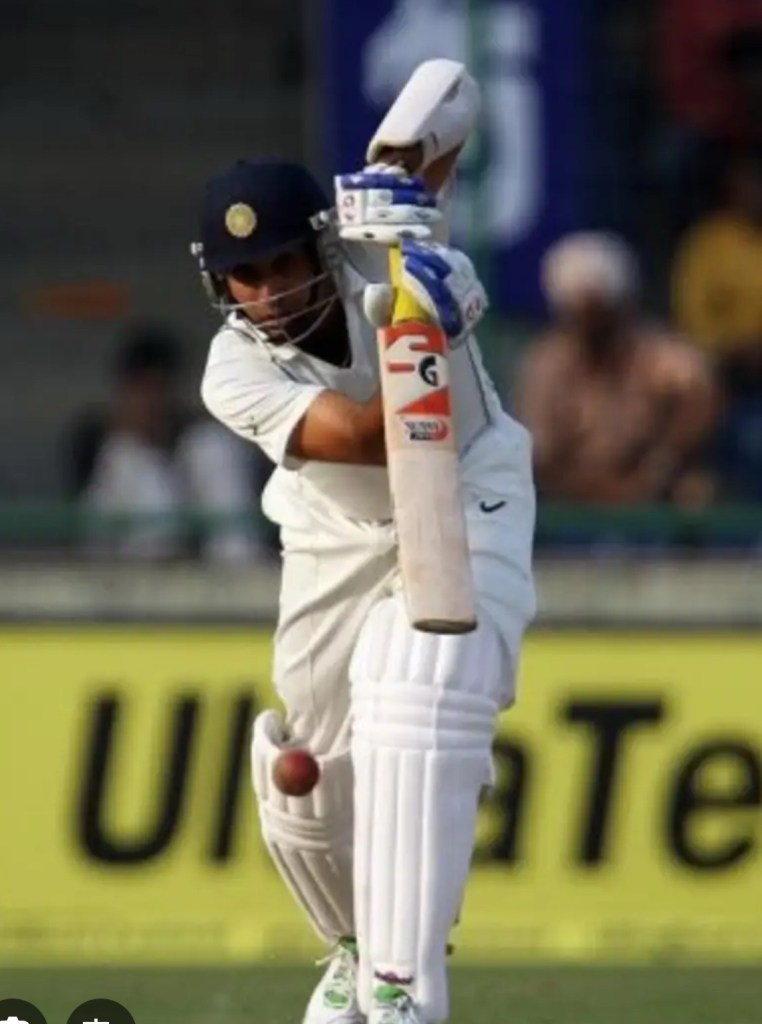
The air at Eden Gardens hung thick with despair that March week in 2001. Australia, that relentless cricketing juggernaut riding a record 15-Test winning streak, had already crushed India in Mumbai and now stood poised to deliver the final blow in Kolkata. Steve Waugh’s declaration at 445 felt like a tombstone, and India’s meek reply of 171 all out seemed to confirm the inevitable. When Waugh enforced the follow-on, history itself pressed down upon us – only twice before had any team won from such depths. What followed wasn’t just a cricket match; it was alchemy. Promoted to No. 3 despite a sciatic nerve injury so severe he needed overnight physio, VVS Laxman began weaving magic on Day 3. By stumps, his defiant 109* offered only a flicker of hope against the Australian tide. Then came Day 4 – an immortal passage where time seemed suspended. Laxman, wrists carving boundaries through gaps only he could see, and Rahul Dravid, the immovable monk, batted for over 100 overs without parting. Their 376-run stand wasn’t mere runs; it was psychological warfare waged with willow. Laxman’s monumental 281 and Dravid’s stoic 180 left them on saline drips but transcendent. Setting Australia 384, Harbhajan Singh and Sachin Tendulkar then tore through the shell-shocked visitors on Day 5, triggering a collapse from 166/3 to 212 all out. That 171-run victory, ending Australia’s streak, was more than a win; it was the defiant roar of a sleeping giant awakening, a miracle forged by Laxman’s artistry and sheer will against inevitability. My heart still races recalling the delirium.
Two years later, that elation curdled into profound sorrow in Johannesburg. As Sachin Tendulkar slashed Glenn McGrath to point early in the World Cup final chase of 359, a cold dread settled over me. The subsequent collapse to 147/5 felt tragically inevitable, not just because of Ricky Ponting’s brutal assault, but because of a gaping, self-inflicted wound in the Indian lineup. VVS Laxman, the very architect of Eden Gardens, the man whose wrists had danced India to its greatest Test triumph, sat watching from Hyderabad. The selection catastrophe still stings. Laxman had been India’s highest run-scorer in the ODI series against New Zealand just before the World Cup. Yet, the team management, led by Sourav Ganguly and coach John Wright, chose the bits-and-pieces all-rounder Dinesh Mongia over him. Shockingly, all five selectors had backed Laxman. Ganguly overruled them, citing the need for an “all-rounder.” Mongia managed a paltry 12 runs in the entire tournament. Laxman was shattered. He fled to the US, avoiding cricket for months, confessing he almost gave up the game. He wouldn’t speak to Ganguly for three months – a silence echoing the betrayal felt by millions. Watching Virender Sehwag blaze a defiant 82, I ached for what could have been. Imagine Laxman’s sublime grace partnering Sehwag’s fury: the perfect blend of elegant anchoring and boundary-blasting disruption against McGrath and Gillespie. Instead, Mongia scratched out 12, and India folded for 234, losing by a soul-crushing 125 runs. The tragedy wasn’t just losing the final; it was the avoidable exile of our most luminous big-match talent. Eden taught us miracles happen when belief meets genius. Johannesburg taught us that ignoring that genius invites a sorrow that lingers, a haunting symphony of what-ifs forever played on the heartstrings of memory.

- Cricket’s Unbroken Chain of Fire
From Foursome Fearsome to Bumarah
Watching Jasprit Bumrah charge in today feels like witnessing lightning strike twice. That unorthodox run-up, the whiplash release, those toe-crushing yorkers at 95mph – he’s cricket’s modern tempest. His 2024 Border-Gavaskar heroics (32 wickets at 13.06) left batters psychologically shattered. Adam Gilchrist, who faced legends, claims Bumrah “operates on a different planet” with a Test average (19.52) lower than Marshall, Ambrose, or Garner. Yet every time I see him dismantle a batting order, my mind drifts to an era when entire teams faced this fury daily – when the West Indies didn’t have a Bumrah, they had an army of them.
Before speed guns or T20s, Caribbean fast bowlers rewrote cricket’s DNA. Imagine facing Wes Hall’s rhythmic 6’5″ frame thundering toward you in the 1960s, his coiled delivery capturing primal energy as he took 192 Test wickets. Or Charlie Griffith’s deceptive swing making batsmen dance on burning coals. Then came the hurricane: Roberts with his two-speed bouncers, Holding’s silk-and-thunder run-up earning the name “Whispering Death” (mid-stride menace, 1976), Croft’s slinging missiles from wide angles, and Garner’s 6’8″ frame making yorkers fall from the sky like artillery.
But none burned brighter than Malcolm Marshall. At 5’9″, he defied physics – his skidding bouncer fracturing Mike Gatting’s cheekbone with a sound “like a champagne cork.” His 376 wickets at 20.94 remain cricket’s Everest. Then Ambrose’s glacial stare and 7/1 demolition of Australia, Walsh’s metronomic menace claiming 519 scalps, Patterson’s human-hurricane pace that felt “like staring down a gun barrel.” These weren’t bowlers – they were elemental forces. Batters developed evasive techniques just to survive; umpires rewrote bouncer rules to contain them. For 15 straight years, no team beat them in a Test series.
That’s why I ache for the “seam feast” we lost. Since Akram’s reverse-swing sorcery, Donald’s explosive rage, and Steyn’s controlled fury left the stage, cricket’s soul feels lighter. We’ve traded gladiatorial combat for data-driven match-ups. Bumrah stands alone – India’s non-Bumrah bowlers averaged 34.82 in Australia last tour – while the Windies attacked in relentless waves. No algorithms, no mercy. Just Roberts setting traps with slower bouncers, Marshall hiding swing behind a snarl, Ambrose stalking back to his mark with icy certainty.
Yet in Bumrah’s silence, I see Marshall’s focus. In his yorkers, I feel Garner’s height. In his strike rate, I taste Ambrose’s precision. He isn’t like the West Indian greats – he’s their spiritual heir. When he angles one through Khawaja’s gate or shatters Pope’s stumps, I’m watching Croft’s sling, Holding’s flow, and Roberts’ cunning reborn. The thunder never faded; it just found a new sky. As David Lloyd sighed after facing those Caribbean legends: “That golden age is gone… but the fear they planted? That’s forever in the game’s bloodstream.”
The Fearsome Foursome united, 1979 remains cricket’s most terrifying portrait – a brotherhood that didn’t just take wickets, they reshaped imagination. So when you see Bumrah today, remember: you’re not watching one man. You’re seeing the ghosts of Hall, Marshall, and Holding, all converging in one devastating, unbroken chain of lightning.
Image Credits: Getty Images (Windies legends), Mirror UK (Marshall), ESPNcricinfo (Bumrah).


- Multipolar universe
The Infinite Reflection: Unraveling the Science and Fiction of Parallel Universes
“Go then, there are other worlds than these.“
— Roland Deschain in Stephen King’s The Dark TowerThe concept that our universe might be just one bubble in an infinite cosmic foam of realities has evolved from philosophical speculation to a legitimate scientific hypothesis—and a narrative engine for some of our most compelling fiction. From Stephen Hawking’s final equations to Stephen King’s dark fantasy epics, the multiverse theory tantalizingly suggests that every choice branches into new existence, every possibility becomes reality somewhere in the cosmic tapestry. This article examines how science and fiction intertwine in exploring existence beyond our observable horizon.
The Scientific Foundations: More Than Sci-Fi Fantasies
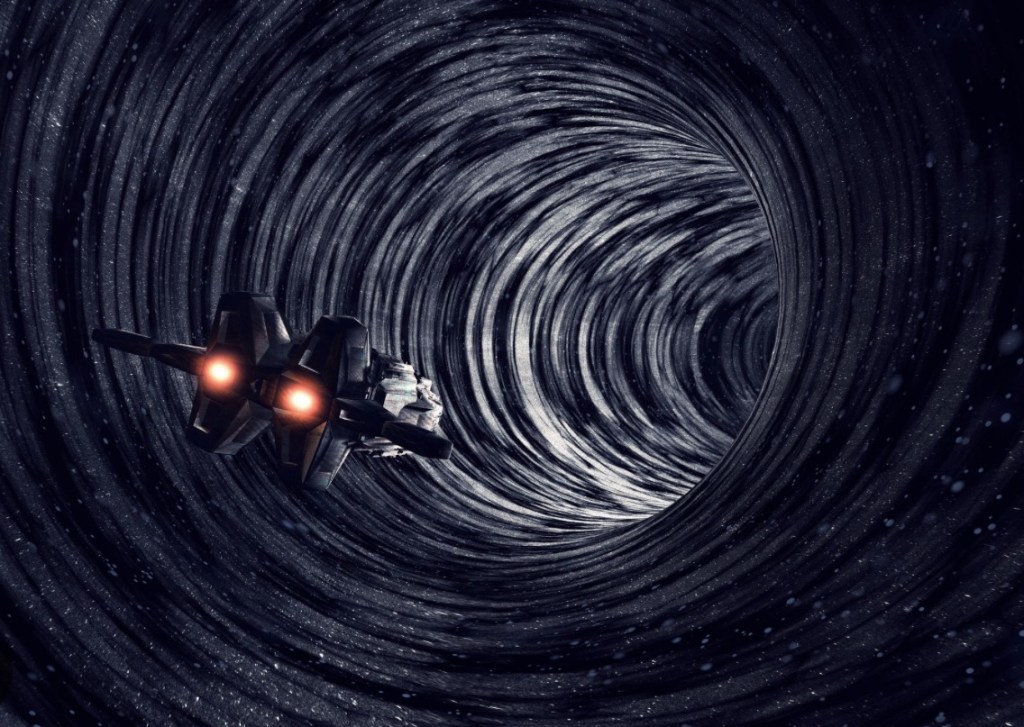
Modern cosmology suggests our universe began with cosmic inflation—a faster-than-light expansion from a singularity. According to Alexander Vilenkin’s theory of eternal inflation, this process didn’t end uniformly across space. While inflation stopped in our region 13.8 billion years ago (creating the Big Bang fireball), it continues elsewhere, generating isolated “bubble universes” with potentially different physical laws. These bubbles recede from each other faster than light, making contact impossible . Hawking’s final paper, “A Smooth Exit from Eternal Inflation” (2018), proposed that evidence for these alternate universes might exist in cosmic background radiation, potentially detectable by future spacecraft sensors . Quantum mechanics adds another layer: Hugh Everett’s many-worlds interpretation posits that every quantum decision spawns new universes. When an electron exists in multiple states simultaneously, it doesn’t “choose” one state upon observation—instead, reality branches, creating parallel timelines for every outcome .
Table: Scientific Multiverse Theories vs. Fictional Depictions Scientific TheoryKey MechanismFictional CounterpartNotable ExampleEternal Inflation Bubble universes in expanding space Magical portals/alternate dimensions His Dark Materials (Philip Pullman) Quantum Many-Worlds Branching at quantum decisions “What if?” divergences Dark Matter (Blake Crouch) Infinite Replication Particle arrangements repeating Mirror selves/doppelgängers Counterpart (TV series) Mirror Cosmology Antimatter universe before Big Bang Time-reversed worlds Tenet (Christopher Nolan)
Stephen King’s Dark Tower: Fiction as Cosmic Blueprint
Long before multiverses dominated cinema, Stephen King wove an intricate web connecting his novels through The Dark Tower series. At its center stands the titular Tower—a metaphysical axis sustaining all existence, guarded by six Beams and twelve Guardians. If it falls, all realities crumble into Discordia . King’s multiverse features:
- Todash Travel: Characters “slip between worlds” during near-death states or psychic episodes
- Twinners: Parallel versions of individuals across realities (e.g., Jack Torrance’s possible counterpart in Desperation)
- Ka: A force resembling destiny that binds characters across stories like The Stand and Insomnia
Locations like Derry, Maine and Castle Rock serve as nexus points, appearing in over 40 stories as interdimensional weak spots . Randall Flagg epitomizes multiversal evil, morphing identities (The Stand‘s “Walkin’ Dude,” Eyes of the Dragon‘s dark wizard) to threaten realities . King even inserted himself as a character, suggesting fiction shapes reality: Gan (the creator) uses King to document Roland’s quest, implying stories are cosmic necessities .
Testing the Untestable: Science’s Greatest Challenge
Despite compelling theories, the multiverse remains controversial due to falsifiability issues. As Ethan Siegel notes, we cannot observe beyond our cosmic horizon (92 billion light-years across), let alone probe other bubbles . Critics invoke Occam’s Razor, arguing multiverses unnecessarily complicate models. Yet tantalizing clues emerge:
- Antarctic Anomalies: NASA’s 2020 detection of high-energy particles emerging from Earth suggests particles reversing time—a potential multiverse signature
- Cold Spot Mystery: A cosmic void could be a “bruise” from a collision with another universe
- Quantum Doubling: Nobel Prize-winning experiments proved electrons exist in multiple states simultaneously
As physicist Max Tegmark argues, rejecting the multiverse because it’s unobservable might be akin to medieval scholars denying other continents existed .
Why We Care: Multiverses as Mirrors
Whether through Hawking’s equations or King’s fantasies, multiverses captivate because they reflect existential questions:
- Regret Mitigation: If every choice spawns a universe, “wrong decisions” become illusions
- Anthropic Principle: Fine-tuned physics (e.g., gravity’s strength) may simply reflect our presence in a life-friendly bubble
- Narrative Freedom: Fiction uses multiverses to explore identity (e.g., Everything Everywhere All At Once) and consequence (Marvel’s What If…?)
In Ted Chiang’s Anxiety Is the Dizziness of Freedom, “prisms” allow communication with alternate selves, paralyzing society with infinite regret . King’s Dark Tower similarly suggests that while multiverses exist, our choices retain meaning because we experience only one path .
The Horizon: Where Science and Myth Converge
Stephen Hawking’s final paper proposed mapping multiverses through cosmic radiation fingerprints—a project now underway at the Perimeter Institute . Meanwhile, fiction advances philosophical inquiries King pioneered: Can a “prime” self exist across realities? Does saving one universe doom another? As quantum computing advances, simulating branching realities may soon test Everett’s math . Until then, multiverses remain humanity’s most profound thought experiment: a reminder that as Roland Deschain learned, sometimes to save your world, you must recognize its place among infinite others. For in the words of the man in black: “The greatest mystery the universe offers is not life but size. Size encompasses life” . In the vastness of what might be, we find both terror and liberation—the dizziness of freedom, and the weight of significance.

• • •
 V B John